 Skip to content

We Are Here For Your Commercial Security Needs!
Commercial Security Services For Multi-Tenant Property
Commercial property carries a security problem that single-occupant buildings do not: you are responsible for a space that many different people have a legitimate reason to enter, at many different hours, for many different purposes. Tenants, their employees, their customers, delivery drivers, contractors, cleaning crews and the general public all move through the same lobbies, corridors, elevators and parking structures. Controlling that flow without making the property feel hostile is the entire job.
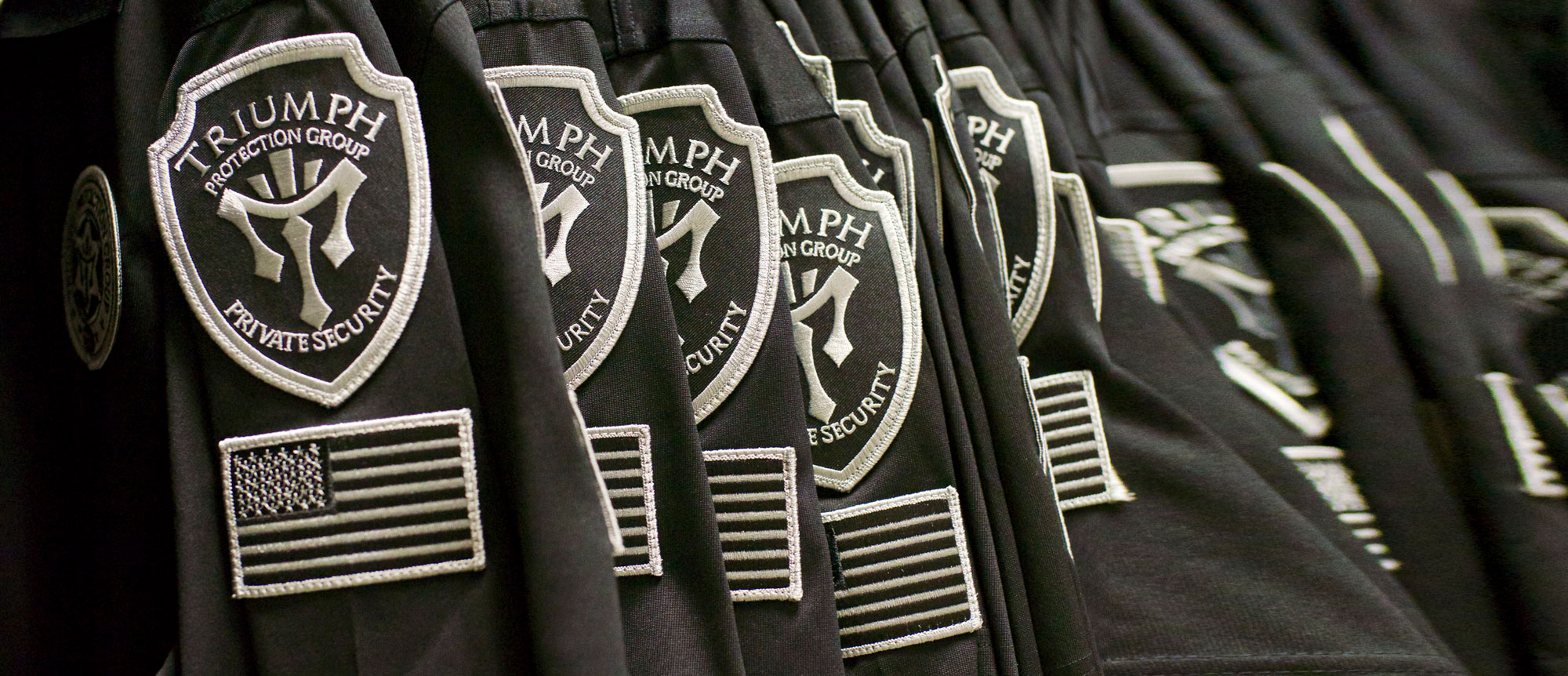
Triumph Protection Group builds commercial security programs for office buildings, business parks, retail plazas, mixed-use developments and multi-tenant industrial campuses. We staff the posts, write the access rules, patrol the common areas and parking decks, respond to tenant calls, and document everything in a form that supports your property manager, your ownership group and your insurer.
What separates a working commercial program from an expensive one is fit. A Class A office tower with a concierge desk needs a different officer, a different uniform and a different posture than a strip center dealing with overnight loitering and cart theft. We scope to the actual property, the actual tenant mix and the actual incident history rather than dropping a standard guard package on every address.
The Common-Area Problem In Multi-Tenant Buildings
In a multi-tenant building, each tenant secures their own suite and nobody naturally owns the space between suites. Lobbies, corridors, stairwells, restrooms, loading areas, elevator banks, roof access and parking structures are common areas, and those common areas are where the overwhelming majority of commercial incidents happen. They are also where premises liability exposure concentrates, because they are the parts of the property the landlord actually controls.
A commercial security officer is the mechanism by which the landlord exercises that control. The officer decides who enters the lobby after hours, confirms that the contractor on the freight elevator has authorization, notices that a stairwell door has been propped for the third night running, and produces a written record when a tenant reports a theft. Without that, common-area security is a set of policies nobody enforces.
We also treat tenant relations as part of the security function. Officers on commercial property interact constantly with people who are not suspects: employees badging in, clients arriving for meetings, drivers with a delivery. An officer who cannot handle those interactions gracefully generates tenant complaints that eventually cost the property manager more time than the original security problem did.
Access Control, Visitor Management And After-Hours Entry
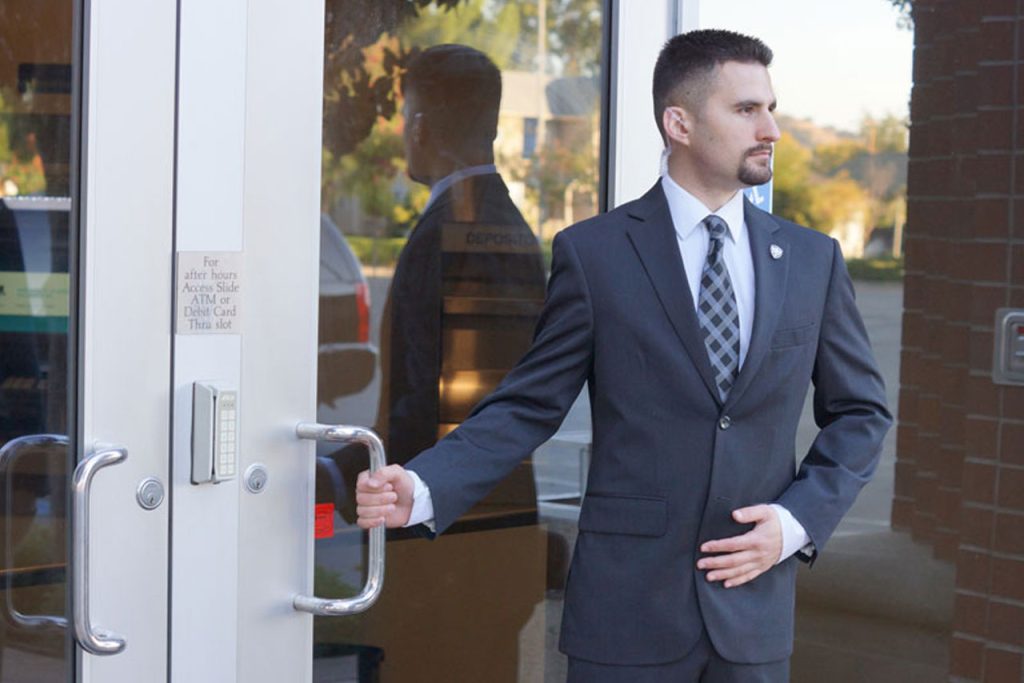
Most commercial buildings run open during business hours and restricted outside them, which creates a predictable seam. We staff that seam. Officers verify identity against the tenant authorization list, log entries, issue and recover visitor credentials, and escort contractors to the suite they are cleared for rather than letting them roam the building with a key.
Contractor and vendor management deserves specific attention because it is the most commonly exploited access path in commercial property. Someone in work clothes carrying a toolbox is rarely challenged. We require authorization confirmed against the tenant of record before access is granted, and we log the arrival, the destination and the departure so there is a record if something goes missing from a floor that person visited.
Where the building runs an electronic access system, our officers work with it rather than around it. That means monitoring door-forced and door-held alarms, responding to them physically, checking that badge readers are functioning, and reporting credentials that appear to be shared or cloned. An access system nobody responds to is a log file, not a control.
Parking Structures, Lots And Tenant Escorts
Parking is consistently the highest-risk area on commercial property and the one owners most often leave uncovered. Structures are enclosed, poorly sightlined, quiet outside peak hours, and full of unattended vehicles containing valuables. Catalytic converter theft, vehicle burglary, wheel theft, and assaults on people walking to their cars all concentrate there.
We patrol structures and surface lots on foot and by vehicle at irregular intervals, check stairwells and elevator lobbies, watch for vehicles that have been circling or parked with occupants, and hold visible presence during shift-change and closing windows when foot traffic peaks. We also provide escort service for tenants walking to vehicles after dark, which is one of the highest-value and lowest-cost tenant amenities a property can offer.
Patrol findings feed back into the property. Persistent dark zones, failed lighting, broken gate arms, non-functioning cameras and damaged fencing get reported in writing so ownership can correct the physical conditions that keep generating incidents, rather than paying indefinitely for officers to compensate for them.
Loitering, Trespass And Documented Warnings
Retail plazas and commercial frontage attract loitering, unauthorized overnight occupancy, aggressive solicitation and encampment. Handling this well requires officers who understand the actual legal framework rather than improvising. Enforcing trespass generally requires that the person has been warned and has refused to leave, and a documented warning is what converts a recurring nuisance into an enforceable matter.
Our officers issue and log trespass warnings with date, time, description and circumstances, maintain a running record of repeat individuals, and coordinate with local law enforcement when a matter genuinely requires a police response. That written history is what allows an eventual arrest or civil remedy to hold up, and it is exactly what a property manager cannot produce after the fact if nobody was documenting.
Equally important is knowing when not to escalate. Officers are trained on de-escalation and on the limits of a private security officer’s authority. An officer who initiates a physical confrontation over a non-violent trespass has converted a nuisance into a lawsuit against your property.
Premises Liability And The Documentation That Protects Ownership
Commercial landlords owe a duty of reasonable care to people lawfully on the property, and in California that duty can extend to protecting against foreseeable criminal acts by third parties. Foreseeability is generally established through prior similar incidents on or near the property. This is why incident documentation is not administrative overhead: it is the record of what you knew and what you did about it.
A property with a documented security program, written post orders, logged patrol tours, recorded trespass warnings and incident reports demonstrating response sits in a fundamentally different position than one relying on cameras and hope. We build that file as a byproduct of doing the work, and we provide it to ownership, property management and counsel on request.
Retail Plazas And Mixed-Use: A Different Risk Profile
Retail and mixed-use commercial property behaves differently from office. Foot traffic is public rather than credentialed, hours run later, cash is present, and the tenant mix changes what draws problems to the site. A plaza anchored by a grocery and a liquor store generates a different pattern than one anchored by medical offices, and the security plan should reflect that rather than treating all frontage as equivalent.
Common issues include shopping cart theft and abandonment, shoplifting spillover into the parking lot, aggressive panhandling at entrances, after-hours occupancy of recessed doorways and loading alcoves, dumpster scavenging, and vehicle break-ins during peak shopping periods. Each has a different countermeasure, and most respond better to predictable officer presence at the right hours than to more hours generally.
In mixed-use developments where residential sits above commercial, the security program has to serve two populations with opposing preferences. Residents want controlled, quiet, restricted access; retail tenants want open, welcoming, high-traffic access. We handle that by separating the access paths and the officer posture between the residential core and the commercial frontage rather than applying one standard to both.
Emergency Response, Life Safety And Building Coordination
Commercial officers are frequently the first trained responder on scene for medical emergencies, fire alarm activations, elevator entrapments, water intrusion, power failures and severe weather. Their job in those minutes is to stabilize, notify, direct arriving emergency services to the exact location, and keep the situation from compounding while professionals are en route.
That requires officers who know the building rather than the general concept of a building. Our post orders identify fire alarm panel locations, standpipe and sprinkler shutoffs, main electrical and water shutoffs, elevator recall procedures, roof and stairwell access, generator locations and the tenant contacts for each floor. An officer who has to search for the panel during an alarm is not providing the value you are paying for.
We coordinate with your property management team on evacuation procedures, drills and tenant communication, and we document alarm events including cause, response, notifications and restoration. Repeated nuisance alarms from a specific tenant or device show up in that record, which is usually the fastest route to getting the underlying fault corrected.
Commercial Security: Frequently Asked Questions
Who is responsible for security in a multi-tenant commercial building?
The landlord or property manager generally controls and is responsible for common areas, including lobbies, corridors, stairwells, elevators, loading areas and parking structures, while each tenant secures its own leased premises. Because most incidents occur in common areas, commercial security programs are typically contracted at the ownership or property management level rather than by individual tenants.
Can security officers remove someone loitering on our property?
Officers can lawfully ask a person to leave private property and issue a documented trespass warning. If the person refuses, the matter is escalated to law enforcement rather than resolved physically. The documented warning is what makes subsequent enforcement possible, which is why we log every warning with time, date, description and circumstances rather than handling it informally.
Do you provide escorts for tenants walking to the parking structure?
Yes. Tenant escort service is one of the most requested and most cost-effective elements of a commercial program, particularly for buildings with enclosed parking structures or staff leaving after dark. Escorts are requested by radio or phone to the officer on duty, and we build the expected demand into post coverage so the main post is not left unattended.
How does commercial security affect our premises liability exposure?
Property owners owe a duty of reasonable care to lawful visitors, which can include protecting against foreseeable criminal acts. Foreseeability is usually shown through prior similar incidents. A documented program with written post orders, verified patrol tours, logged trespass warnings and incident reports demonstrates that the owner identified risks and responded, which is materially stronger than an undocumented arrangement.
Can officers manage contractor and vendor access after hours?
Yes, and this is one of the highest-value functions in commercial property. We verify contractor authorization against the tenant of record before granting access, log arrival and departure, issue temporary credentials, and escort to the authorized suite where the scope calls for it. Unverified contractor access is among the most commonly exploited entry paths in commercial buildings.
Do we need armed officers for a commercial office property?
Usually not. The large majority of commercial office and business park posts are appropriately staffed with unarmed officers, since the work is access control, patrol, observation and tenant service. Armed coverage is warranted where the property handles cash or high-value goods, has a documented history of violent incidents, or sits in an environment where the risk assessment supports it. We advise against arming a post that does not need it.
Will officers work with our existing camera and badge access systems?
Yes. Our officers monitor and physically respond to access-control alarms such as door-forced and door-held events, verify that readers and cameras are functioning, review footage in support of incident reports, and report credentials that appear shared or compromised. Electronic systems generate information; officers are what convert that information into a response.
How quickly can you take over from our current commercial provider?
A rapid transition begins with an interim scope so posts are covered immediately, followed by a full property walk with your manager and written post orders within the first several days.
Commercial Security By Location
Send us the property type, square footage, tenant mix and the hours that concern you most. We will walk the building, identify where the common-area exposure actually sits, and propose a coverage model scoped to that rather than a generic guard package.
Licensed, insured and bonded, with 24/7 live dispatch.