 Skip to content

Feel Secure Today!
Uniformed Security Guard Services
Uniformed security is the most visible layer of any protection program, and it is the layer that does the most work before an incident ever begins. A properly outfitted officer standing at a lobby desk, walking a perimeter, or controlling a delivery gate changes the arithmetic for anyone evaluating your property as a target. Triumph Protection Group staffs uniformed posts with officers who are licensed, screened, trained to written post orders, and supervised by people who actually visit the site.
The difference between a uniformed guard and a uniformed security program is documentation. Anyone can put a shirt on a body and bill an hour. We build the post orders, define the patrol routes and tour intervals, set the escalation tree, verify every officer’s California Bureau of Security and Investigative Services guard card before the first shift, and produce daily activity reports that give you a defensible written record of what happened on your property and when.
Our officers come from law enforcement, military, and career private-security backgrounds, and they are deployed against a written scope rather than a vague instruction to keep an eye on things. Whether you need a single unarmed lobby ambassador during business hours or a multi-post armed detail running around the clock, the program is built to your risk, your hours, and your budget, and it is adjusted as those change.
What Uniformed Security Guard Services Actually Include
Uniformed security means a licensed officer in identifiable company attire assigned to a defined post with a written scope of duties. In practice that scope usually combines four functions: deterrence through visible presence, access control at entry points, observation and reporting of hazards or policy violations, and a first response that stabilizes a situation until police, fire, or medical services arrive.
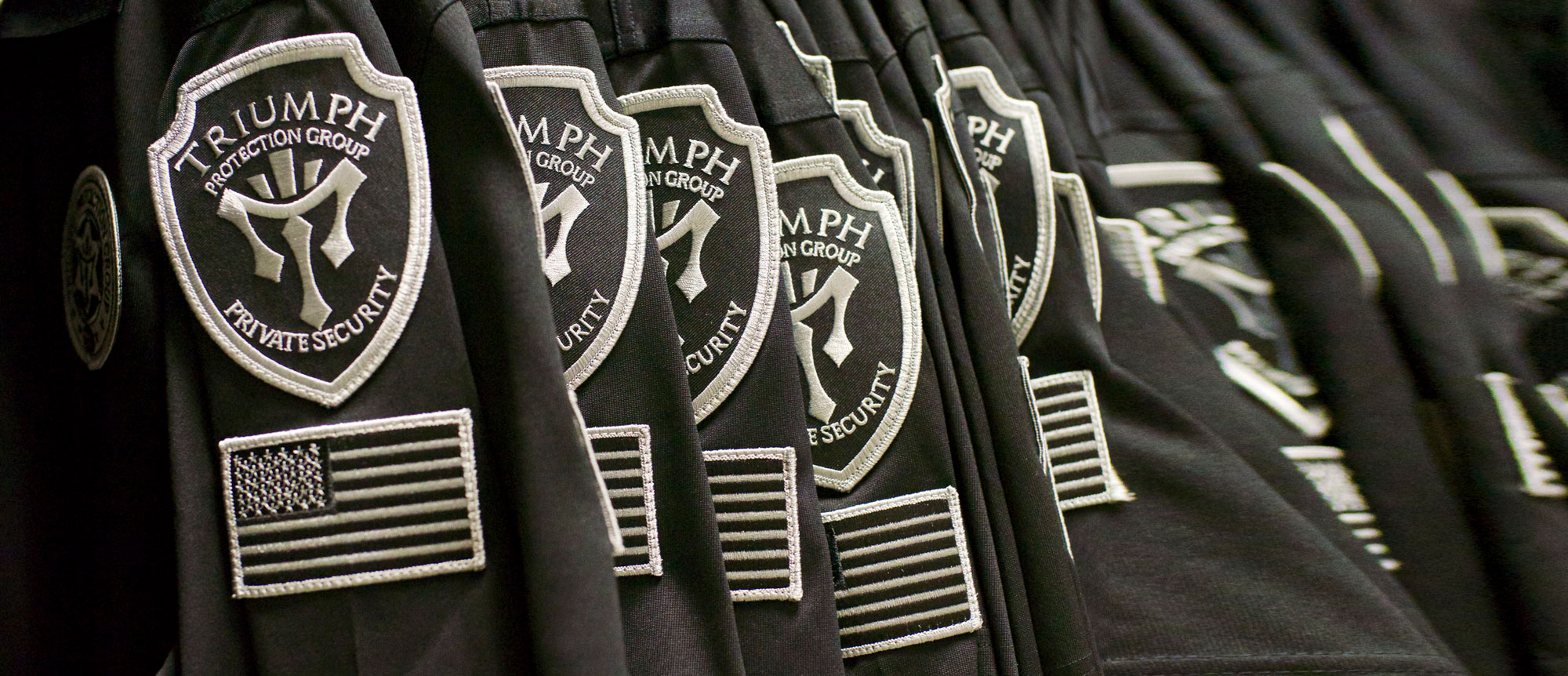
The uniform itself is a working tool, not a costume. It tells legitimate visitors who to approach, it tells anyone considering theft or trespass that the property is actively watched, and it gives your officer standing to challenge someone without ambiguity about who they are. We match presentation to the environment, from soft-look polo and slacks for a hospitality lobby to full tactical dress for an industrial yard or a high-risk overnight post.
Every post is governed by post orders written for that specific site. Post orders define who may enter and under what credential, what the patrol route and tour intervals are, what gets logged, what triggers a call to the supervisor, what triggers a call to 911, and what the officer must never do. Without post orders you do not have a security program, you have a person standing near a door.
Licensing, Guard Cards And The Compliance Floor
In California, private security is regulated under the Private Security Services Act, Business and Professions Code section 7580 and following, and administered by the Bureau of Security and Investigative Services. A security company must hold a Private Patrol Operator license, and every officer working a uniformed post must hold a current BSIS guard card, obtained after a criminal history background check through the Department of Justice and the FBI plus mandated Power to Arrest training.
Officers who carry a firearm must additionally hold a BSIS firearms permit tied to the specific weapon category, renewed on a fixed cycle with live-fire requalification. Officers carrying a baton or chemical agent need the corresponding permits. Triumph Protection Group verifies each credential against the state record before an officer is scheduled, not after, and we re-verify on renewal rather than assuming a card is still valid.
This matters to you for one blunt reason: if an incident goes to litigation, opposing counsel will ask whether the officer on your property was properly licensed and properly trained, and whether you exercised reasonable care in selecting your vendor. A contractor who cannot produce that documentation transfers the exposure to you. We keep the file so that question has a clean answer.
Fixed Posts, Foot Patrol And Vehicle Patrol
Not every risk is best answered by a person standing still. We build coverage from three basic patterns and combine them as the property requires.
Fixed Post Coverage
A fixed post assigns an officer to a single controlled location such as a lobby desk, a truck gate, a construction entrance, or an equipment cage. Fixed posts are the right answer where credential checking, visitor logging, or continuous observation of one high-value point is the priority. They deliver the strongest deterrent signal per hour because the officer is always where a visitor expects them.
Foot Patrol Coverage
Foot patrol moves an officer through the property on a defined route with tour checkpoints, either on a fixed interval or deliberately randomized so the pattern cannot be timed by an observer. Foot patrol finds the things a camera does not: propped fire doors, unsecured windows, sleeping arrangements in stairwells, water intrusion, and equipment left where it can be taken.
Vehicle And Mobile Patrol
Marked vehicle patrol covers large footprints such as industrial parks, distribution yards, storage facilities, and multi-building campuses where walking the perimeter is not practical. Mobile check service delivers a scheduled sequence of visits to several sites during a shift, which is the cost-effective option for properties needing verified presence rather than continuous staffing.
Officer Selection, Training And Supervision
Screening starts before licensing. We interview for judgment and communication, because the overwhelming majority of an officer’s work is talking to people, and an officer who escalates avoidable conflicts creates more liability than the risk they were hired to reduce. Background screening, drug testing, and reference verification follow, then site-specific orientation against the post orders before the first solo shift.
Supervision is where most contracts quietly fail. An unsupervised post drifts: tours get skipped, reports get thinner, the phone comes out. Our supervisors run in-person post checks on an irregular schedule, review daily activity reports for quality rather than mere submission, and hold a named escalation line that is answered by a person at any hour. You receive the supervisor’s name and number, not a general voicemail box.
Officers receive continuing instruction in de-escalation, use-of-force limits, report writing, emergency evacuation, medical response, and the specific hazards of your environment. An officer on a construction site needs different instruction than one working a corporate lobby, and training that treats those as identical produces officers who are competent at neither.
Reporting, Documentation And Accountability
Every shift produces a daily activity report recording tour completions, access events, incidents, hazards observed, and anything referred to management. Incidents generate a separate incident report written close to the event while recall is accurate, with time, location, persons involved, actions taken, and notifications made. These are the documents that matter months later when an insurer or an attorney asks what happened.
Patrol tour verification confirms that checkpoints were actually visited rather than reported from a chair, which converts your patrol schedule from a promise into a record. Where a client wants tighter oversight we provide scheduled reporting summaries so patterns become visible: the same door found unsecured every Thursday is a facilities problem worth fixing, not a nightly note to be filed and forgotten.
Where Uniformed Officers Deliver The Most Value
Uniformed coverage pays for itself fastest where an offender has to make a decision in the open. Lobbies, loading docks, parking structures, construction entrances, equipment yards and after-hours retail frontage all share that trait: the person considering theft or trespass must pass a point where they can be seen, identified and challenged. Placing an officer at that decision point removes the anonymity the act depends on.
It also pays where your own staff are being asked to do security work they were never hired or trained to do. Front desk employees, site superintendents and shift managers routinely end up confronting trespassers, managing angry visitors, or walking a dark lot at closing. That is an injury claim and a liability exposure waiting to happen, and it quietly degrades the job they were actually hired for. Moving that duty to a licensed officer is usually cheaper than the first incident it prevents.
Finally, uniformed presence is the standard answer when an insurer, a lender, a franchisor or a municipality has attached a security condition to your policy, loan, brand agreement or permit. We are used to writing the coverage to satisfy a specific written requirement and providing the documentation that proves the condition is being met on an ongoing basis.
Uniformed Security: Frequently Asked Questions
Do your uniformed officers carry a BSIS guard card?
Yes. Every uniformed officer we deploy in California holds a current Bureau of Security and Investigative Services guard card, issued after Department of Justice and FBI background screening plus mandated Power to Arrest training. We verify the credential against the state record before an officer is scheduled and re-verify at each renewal rather than assuming a card remains valid.
What is the difference between armed and unarmed uniformed security?
Unarmed officers deter, observe, control access and report, and they handle the large majority of commercial posts. Armed officers additionally carry a firearm under a separate BSIS firearms permit with live-fire requalification, and are appropriate where cash or high-value goods are handled, where there is a credible threat history, or where the site is isolated. We recommend armed coverage only where the risk profile genuinely supports it.
How quickly can you fill a post if our current provider fails?
A same-day transition typically starts with a short interim scope so officers can be posted immediately, followed by full written post orders within the first few days once we have walked the property with you.
Can officers wear something other than a standard security uniform?
Yes. Presentation is matched to the environment. We deploy soft-look attire such as branded polo and slacks for hospitality and corporate lobbies, standard marked uniforms for most commercial and industrial posts, and full tactical presentation for high-risk or overnight assignments. If your property requires a specific look to fit the setting, we build to it.
What are post orders and why do they matter?
Post orders are the written instructions governing a specific post: who may enter and on what credential, the patrol route and tour intervals, what must be logged, what triggers supervisor notification, what triggers a 911 call, and the limits on officer action. They convert a guard into a security program and they are the document that demonstrates reasonable care if an incident is later litigated.
How do we know officers are actually completing patrols?
Patrol tours are verified at physical checkpoints, so a completed tour is a record rather than an assertion. Tour completions, access events, hazards and incidents all appear in the daily activity report for the shift, and supervisors run in-person post checks on an irregular schedule specifically so that compliance does not depend on the officer knowing when they will be observed.
Are you licensed and insured to operate at our site?
Triumph Protection Group operates under a Private Patrol Operator license and carries general liability and workers compensation coverage in full. We provide certificates of insurance naming your entity as required by your lease, contract or risk management policy, and we can supply licensing documentation for your vendor file on request.
Is there a minimum number of hours for a uniformed post?
Most uniformed assignments carry a practical minimum shift length because officers are scheduled and paid as shifts rather than by the hour, and very short posts tend to produce weak coverage. Where continuous staffing is not justified, mobile patrol checks are usually the better and less expensive structure, and we will tell you when that is the case rather than selling hours you do not need.
Uniformed Security By Location
Tell us the property, the hours you need covered, and what is driving the requirement. We will walk the site, recommend the post structure that actually fits the risk, and put written post orders in place before the first officer reports.
Licensed. Armed and unarmed uniformed officers available with 24/7 live dispatch.