 Skip to content

Feel More Secure Today!
Plain Clothes Security: Armed And Unarmed
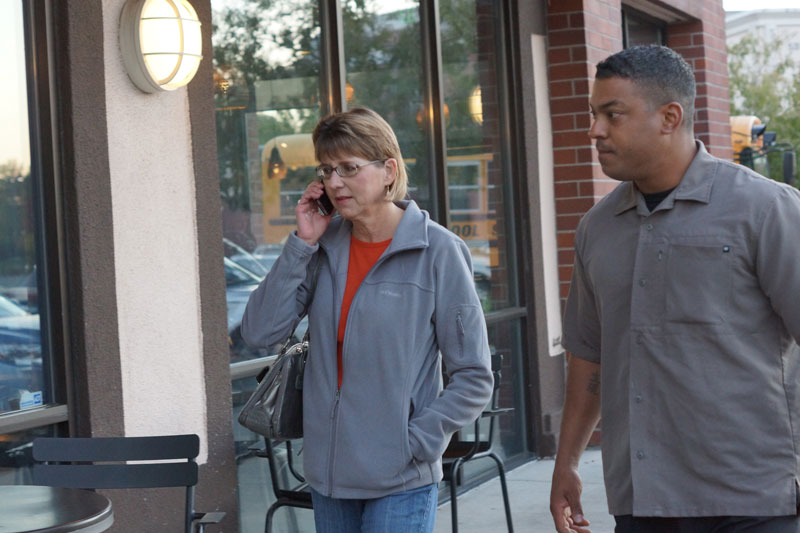
Plain clothes security exists to solve the one problem a uniform cannot: a uniformed officer changes behavior, and sometimes changing behavior is exactly what you do not want. If the objective is to find out who is doing something, to observe it as it happens, and to be able to prove it afterwards, the officer has to be indistinguishable from everyone else in the room. The moment the presence is recognized, the observation ends.
It is also the discipline with the narrowest legal margins in private security. A plain clothes officer still holds the same authority as any private citizen, no more, and works under the same licensing framework. Recording, following, detaining and carrying are each governed by rules that a well-meaning officer can breach without realizing it, and every one of those breaches converts your evidence into a liability. The difference between competent plain clothes work and amateur plain clothes work is almost entirely about knowing where those lines sit.
Triumph Protection Group deploys armed and unarmed plain clothes officers into retail floors, corporate offices, events, residential communities and industrial sites. Every officer holds current state registration, verified per assignment rather than at hire, and works to written orders that state exactly what they may observe, record, say and do.
When Plain Clothes Is The Right Call, And When It Is Not
Plain clothes is correct when the objective is detection, evidence or identification. Inventory is disappearing and nobody can say how. A specific employee is suspected of a specific pattern. A residential community has a recurring overnight problem and the marked patrol simply relocates it. An event has a subject who is expected to attend and must be seen before anything happens.
Plain clothes is the wrong call when the objective is deterrence or reassurance. If tenants, staff or customers need to feel that someone is present, an officer nobody can see delivers nothing, and clients who buy covert coverage and then measure it on how safe the building feels are always disappointed. That is a scoping failure rather than a performance one, and we would rather resolve it in the first conversation.
The most effective programs use both, deployed against different objectives and often at different hours: a uniformed presence that shapes behavior at the visible times, and covert coverage during the windows where the loss is actually occurring. We will say plainly which one your problem calls for, including when the honest answer is that you do not need us covert at all.
Armed Plain Clothes: Exposed Permit Versus Concealed Carry
This is the detail that separates operators who understand the regulatory framework from those who do not, and it matters because getting it wrong is a criminal exposure rather than an administrative one. In California, the Bureau of Security and Investigative Services firearms permit held by armed security officers authorizes carrying an exposed firearm while on duty. It is not a concealed carry authorization. Carrying concealed requires a license issued by the applicable local licensing authority, subject to its own process and conditions.
Plain clothes work is, by definition, incompatible with exposed carry, because an exposed firearm defeats the entire purpose of the assignment. That means armed plain clothes coverage is only lawful where the individual officer holds the appropriate concealed carry authorization for the jurisdiction, and the pool of officers who do is much smaller than the pool of armed officers generally.
Our position is straightforward. We verify credentials per assignment, and where a client requests armed plain clothes coverage we either staff it with an officer holding the correct authorization or we tell you we cannot and propose an alternative, most often an unarmed covert officer paired with an armed uniformed officer nearby. We have never regarded that conversation as a lost sale.
Observation, Recording And The Privacy Line
Covert work generates evidence, and evidence collected unlawfully is worse than no evidence: it is excluded, it discredits the rest of the file, and it creates its own cause of action. Our officers work to explicit recording rules.
Video Versus Audio
These are treated as separate decisions because the law treats them separately. Photographing or recording video of conduct in a place where there is no reasonable expectation of privacy is a different question from recording a conversation. California prohibits recording confidential communications without the consent of all parties, and officers are instructed that audio recording of conversations is not part of the standard toolkit and requires specific direction from counsel before it is contemplated at all.
Where Cameras Never Go
Restrooms, changing and fitting areas, locker rooms, medical spaces and any location where a person is entitled to privacy are absolute exclusions regardless of what is suspected to be happening there. Officers do not observe those spaces, do not position themselves to see into them, and do not accept client instructions to do so. This rule is not negotiable at any price and it is stated in writing at the outset of every engagement.
Following And Surveillance Conduct
Officers maintain distance, do not pursue into vehicles or private residences, and disengage rather than escalate when a subject becomes aware of them. A burned surveillance is recoverable; a confrontation in a parking lot with a covert officer whose status the subject cannot verify is not, and it is exactly the scenario that produces the worst outcomes in this line of work.
Detention Authority And Its Limits
A plain clothes officer carries private person authority, which is narrower than most clients assume. Under California Penal Code section 837 a private person may arrest for a public offense committed or attempted in their presence, or where a felony has in fact been committed and there is reasonable cause to believe the person arrested committed it. That is the entire authority, and it is exercised at the officer’s and the client’s risk.
In retail settings the merchant detention standard under Penal Code section 490.5 provides a more workable frame, allowing a merchant or the merchant’s agent to detain for a reasonable time and in a reasonable manner on probable cause. It still requires the continuous observation chain: selection, concealment, unbroken observation through the point of sale, and passage beyond the last point of purchase. Break the chain and the officer aborts.
We train and measure officers on aborting correctly. An officer who breaks off six stops in a month because the observation chain was incomplete is performing well. An officer with a perfect stop record and thin documentation is a liability being accumulated. Where a stop or an ejection is anticipated, we deploy in coordinated pairs so that the person making contact is not also the person documenting it.
How Plain Clothes Deploys By Environment
On a retail floor the officer shops. They move at customer pace, carry a basket, use fitting rooms and checkout lanes like anyone else, and rotate appearance and pattern between visits so a subject who returns weekly does not begin recognizing the same person. Coverage is scheduled against the hours the loss data actually points to rather than spread evenly.
In corporate settings the officer is typically presented as a contractor, a temporary employee or a visitor, with the cover agreed with your HR and legal contacts in advance so it does not collapse under a routine question. This work most often supports an internal investigation, a suspected diversion of property, or a period of elevated risk around a termination.
At events and on residential property the officer blends into the guest or resident population, identifies subjects of interest before an incident forms, and radios uniformed officers to make contact. In industrial settings covert coverage most often addresses internal loss at the gate, the dock or the scrap area, where a uniformed presence simply moves the activity to a different shift.
Reporting, Cover Integrity And Testimony
Reports are written the same shift by the observing officer, with observation times, positions, what was seen at each point, the actions taken, and any recordings referenced by file and time. Because covert work exists to support a decision or a case, the report is the deliverable rather than a byproduct.
Cover integrity is managed actively. Officers are rotated before they become familiar, do not use the same appearance or arrival pattern repeatedly at one site, and do not communicate with uniformed staff in view of the floor. Client-side knowledge of the deployment is deliberately limited to the smallest set of people who need it, because the most common cause of a compromised covert deployment is a well-meaning employee mentioning it.
Where a matter proceeds to a legal process, officers are available to provide statements and testimony on what they personally observed and documented. That availability is one of the reasons we insist reports be written by the observing officer in their own words rather than summarized by a supervisor.
Covert Versus Overt Coverage Compared
The choice between plain clothes and uniformed coverage is not a budget decision, it is an objective decision. These are the outcomes each actually produces, and buying one while measuring the other is the most common source of dissatisfaction in this category.
| Objective | Plain Clothes Officer | Uniformed Officer | Camera Review Only |
|---|---|---|---|
| Deterring behavior before it starts | None by design | Strongest | Weak |
| Observing conduct as it occurs | Strongest; behavior unchanged | Limited; subject adapts | Only where cameras point |
| Identifying an unknown internal subject | Primary method | Rarely effective | Sometimes, after the fact |
| Building a lawful detention | Unbroken observation possible | Compromised by visibility | Not possible |
| Reassuring staff, tenants or guests | None; nobody knows they are there | Immediate and visible | Minimal |
| Evidence quality for a case | Contemporaneous observation reports | Incident reports after the event | Footage without context |
| Best used | Detection, evidence, investigation | Deterrence, response, presence | Supporting both, replacing neither |
Plain Clothes Security: Frequently Asked Questions
Can a plain clothes officer carry a concealed firearm?
Only if that specific officer holds the appropriate concealed carry license for the jurisdiction. This is widely misunderstood. In California the Bureau of Security and Investigative Services firearms permit authorizes carrying an exposed firearm on duty; it is not a concealed carry authorization, and concealed carry requires a license issued by the applicable local licensing authority. Since exposed carry defeats the purpose of a covert assignment, armed plain clothes coverage is only lawful with the correct license. We verify per assignment, and where we cannot staff it correctly we say so and propose an unarmed covert officer paired with an armed uniformed officer nearby.
Do plain clothes officers have more authority than uniformed ones?
No. They have exactly the same authority, which is that of a private person. Under California Penal Code section 837 a private person may arrest for a public offense committed in their presence, or where a felony has in fact been committed and there is reasonable cause to believe this person committed it. In retail environments the merchant detention standard under section 490.5 provides a more workable frame. Plain clothes changes what an officer can observe, not what they may do.
Will your officers record video or audio?
Video and audio are treated as separate decisions because the law treats them separately. Officers may photograph or record video of conduct in places without a reasonable expectation of privacy. Audio recording of conversations is not part of the standard toolkit, because California prohibits recording confidential communications without the consent of all parties, and it is only contemplated on specific direction from your counsel. Restrooms, fitting and changing areas, locker rooms and medical spaces are absolute exclusions regardless of what is suspected there, and we do not accept instructions to the contrary.
How do you keep the officer from being recognized?
Through active cover management rather than costume. Officers are rotated before they become familiar, vary appearance, arrival time and behavioral pattern between visits, do not communicate with uniformed staff in view of the floor, and behave at the pace of the environment they are in. We also limit client-side knowledge of the deployment to the smallest necessary group, because the most common cause of a burned deployment is a well-meaning employee mentioning it to a colleague.
Can plain clothes officers work alongside our uniformed guards?
Yes, and the combination usually outperforms either alone. The uniformed officer shapes behavior and handles response; the covert officer observes what the uniformed presence would otherwise displace. We coordinate them on a separate channel, and where a stop or ejection is anticipated we deploy in pairs so that the person making contact is not also the person documenting the incident.
Is this useful for internal employee investigations?
It is one of the most common uses. Covert coverage supports suspected diversion of property, time or inventory, and is typically presented as a contractor, temporary employee or visitor with the cover agreed in advance with your HR and legal contacts so it survives a routine question. We coordinate with your counsel on scope and evidence handling, because an internal investigation that produces unusable evidence is worse for you than one that produced none.
What if the officer is discovered by the subject?
They disengage. A burned surveillance is recoverable, and a confrontation between a subject and a covert officer whose status cannot be verified on the spot is the single worst outcome available in this work. Officers maintain distance, do not pursue into vehicles or residences, and break off rather than escalate. We then reassess the deployment, usually with a different officer and a changed pattern.
How is a covert deployment reported?
With more detail than an overt one, because the report is the deliverable. Each shift produces a report written by the observing officer covering positions held, observation times, what was seen at each point, actions taken and any recordings referenced by file and time, with facts kept separate from conclusions. For multi-visit matters we maintain a running subject file, and officers are available to provide statements and testimony on what they personally observed.
Plain Clothes Security By Location
Tell us what you are trying to find out, not how many officers you think you need. Covert coverage is scoped from the objective backwards, and the first thing we will tell you is whether the objective actually calls for plain clothes at all.
Licensed. Armed and unarmed covert officers for retail, corporate, event, residential and industrial environments.