 Skip to content

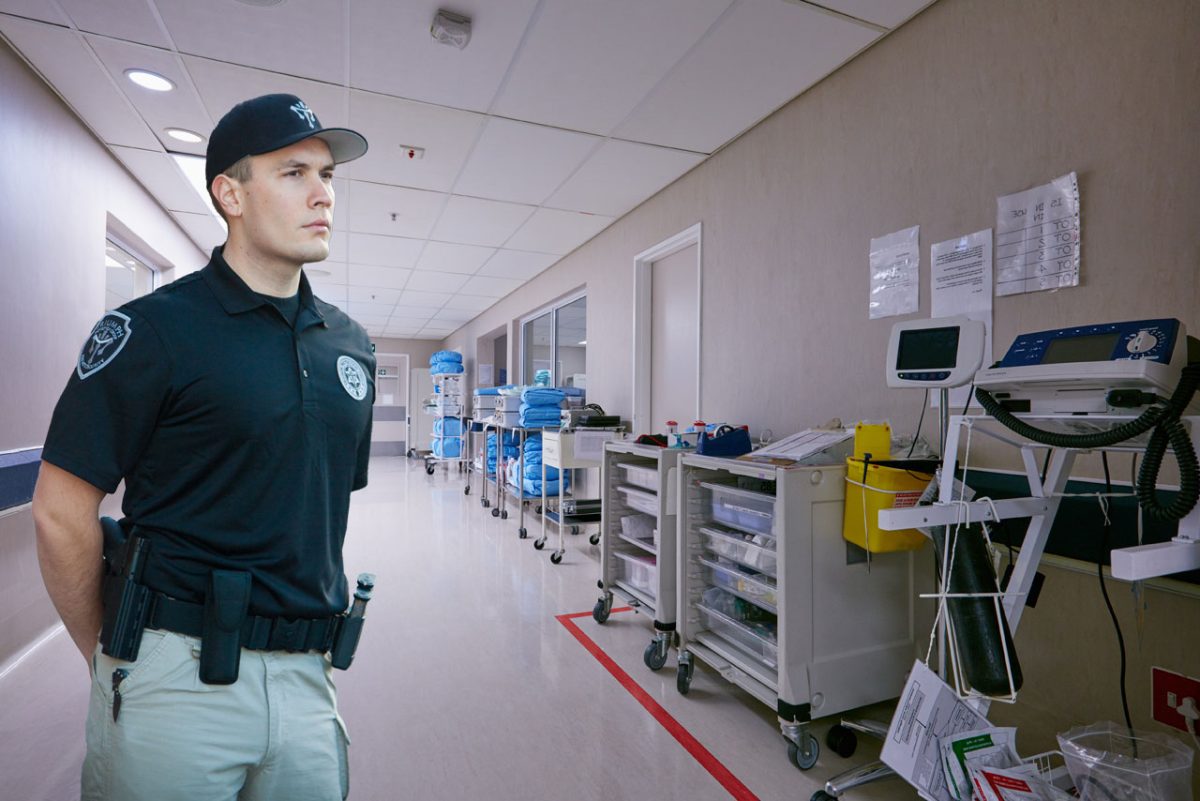
A hospital is a contradiction. It is a place of healing, yet it is often a scene of violence. It is designed to be open and welcoming to the community 24/7, yet it houses dangerous drugs, vulnerable patients, and sensitive data that must be locked down like a fortress.
This is the “Sanctuary Paradox,” and it makes healthcare security uniquely challenging.
Unlike a corporate office or a construction site, you cannot simply lock the doors at 5:00 PM. You cannot deny entry to a frantic family member in the ER. Healthcare security officers operate in a pressure cooker where high emotions, mental health crises, and medical emergencies collide. They are not just guards; they are part of the clinical care environment, often the only barrier between a doctor and a “Code Gray” (combative person) situation.
The ER Pressure Cooker
The Emergency Department (ED) is the frontline. According to the Occupational Safety and Health Administration (OSHA), healthcare workers face a risk of workplace violence that is four times higher than the private industry average.
Tensions run high in waiting rooms. Long wait times, confusion, and fear can turn a patient or family member aggressive in seconds. Security officers in the ED require a specific skillset: “Clinical Empathy.”
They must distinguish between a person who is simply a criminal and a person who is experiencing a medical or behavioral health crisis. The approach to each is radically different. A professional healthcare security officer knows how to de-escalate a confused dementia patient gently, while also having the tactical skill to restrain an individual under the influence of narcotics who threatens nursing staff. This ability to switch gears instantly is vital for patient safety and staff retention.
The Regulatory Minefield: HIPAA, CMS, and JCAHO
Healthcare security is also a legal minefield. Every action an officer takes is scrutinized under strict federal regulations.
- HIPAA: Officers see patient data and hear private medical information constantly. A breach of confidentiality by a security guard is a federal offense that can cost a hospital millions.
- CMS & The Joint Commission: Hospitals must meet rigorous accreditation standards. Security plays a huge role in these audits, from managing “infant abduction” drills (Code Pink) to securing medication supply chains.
An untrained guard is a liability. A guard who doesn’t understand that they cannot discuss a celebrity patient’s presence or who mishandles a forensic chain of custody for a crime victim can invite massive lawsuits. We ensure our teams are fluent in the language of healthcare compliance, acting as partners in your accreditation journey.
Access Control in an Open Environment
How do you secure a building that has thousands of visitors a day? The answer lies in “layered security.”
While the lobby might feel open, the internal layers are strict. We manage the flow of humanity. We ensure that visitors to the Maternity Ward are vetted and badged differently than visitors to the ICU. We patrol the “back of house” areas where pharmacies and bio-hazardous materials are stored.
The goal is to create a safe container for care. When doctors and nurses feel safe, they make better medical decisions. When patients feel safe, they heal faster. The International Association for Healthcare Security and Safety (IAHSS) emphasizes that a visible, competent security presence is a key determinant in patient satisfaction scores (HCAHPS).
Your Experts for Healthcare Security
Protect the hands that heal. Secure your facility with officers trained for the clinical environment.
Triumph Protection provides specialized healthcare security solutions that balance compassion with compliance. Visit our Healthcare Security page to upgrade your patient safety protocols, or Contact Us for a risk assessment.