 Skip to content

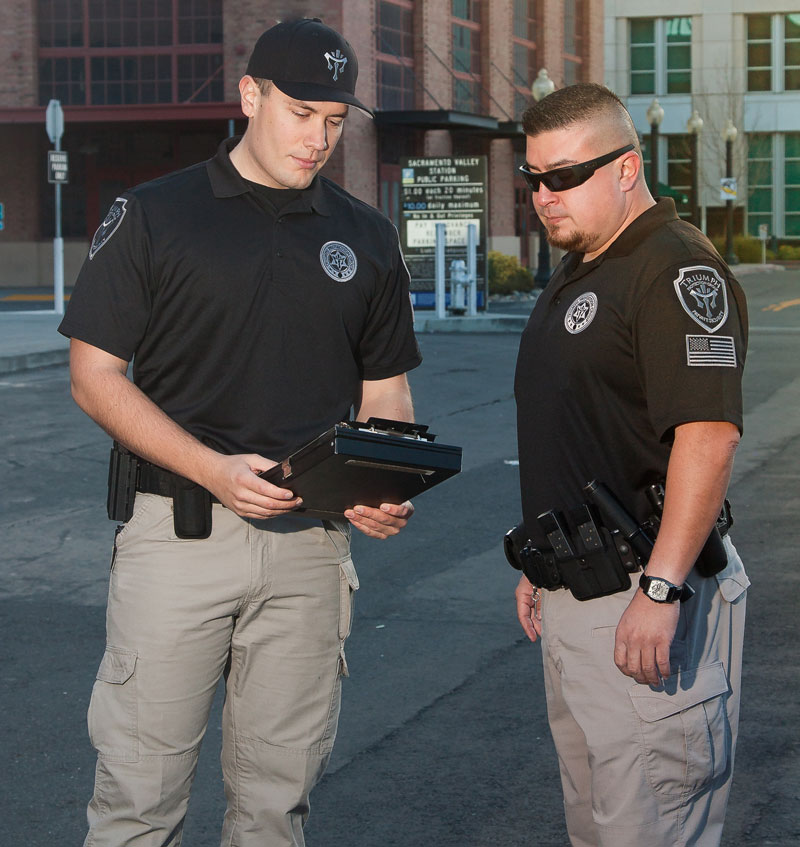
We live in a world obsessed with surveillance. We have doorbell cameras that talk to our phones, AI algorithms that scan license plates, and motion sensors that can detect a pin drop. It is tempting for property managers and business owners to believe that technology has made the physical security guard obsolete. “Why pay for a person,” they ask, “when I can pay for a camera?”
The answer lies in simple human psychology. A camera observes a crime; a uniformed officer prevents it.
This phenomenon is known in security circles as the “Sentinel Effect.” It is the psychological shift that occurs in the mind of a criminal when they see a human authority figure. While a camera represents a future risk (the risk of being caught later), a uniformed officer represents an immediate risk (the risk of being stopped now). For businesses looking to secure their assets, understanding this distinction is the key to moving from “recording crime” to “stopping crime.”
The “Hard Target” vs. “Soft Target” Calculation
Criminals, by and large, are rational actors. They are constantly running a subconscious cost-benefit analysis. They look for “soft targets”—environments with low resistance, poor lighting, and no supervision.
A uniformed security officer instantly converts a property into a “hard target.” When a potential offender spots a uniform, their brain registers a threat to their freedom. It forces a recalculation. Is breaking into this car worth the risk of a physical confrontation? Is vandalism worth the immediate arrest?
Technology doesn’t offer this same deterrent. Criminals know that cameras have blind spots. They know that police response times to an automated alarm can be slow. But they cannot predict what a human officer will do. Will the officer patrol the back alley? Will they check the door handles? This unpredictability is a powerful weapon. According to data from the loss prevention industry, visible human deterrence remains one of the most effective methods for reducing opportunistic crimes like loitering, vandalism, and theft.
The 5% That Matters Most
There is an old saying in the industry: “Security is 95% boredom and 5% pure adrenaline.” While modern training emphasizes customer service and observation, the critical value of a uniformed officer lies in that 5%.
When an emergency strikes—a fire, a medical collapse, or a violent aggressor—a camera can only watch. It cannot perform CPR. It cannot evacuate a building. It cannot de-escalate a shouting match before punches are thrown.
A trained security officer bridges the gap between the onset of a crisis and the arrival of first responders. That gap is often 10 to 15 minutes. In a cardiac event, those minutes are the difference between life and death. In a fire, they are the difference between a minor incident and a total loss.
By having a human on-site, you are investing in a first responder who knows your building’s layout, knows your staff, and has the training to act immediately. This “human equity” is an insurance policy that technology simply cannot replicate.
Building the “Safe Space” Experience
Beyond crime prevention, uniformed security plays a massive role in “perception management.” Whether you run a luxury apartment complex, a hotel, or a corporate park, your tenants and guests want to feel safe.
A camera doesn’t make people feel safe; it often makes them feel watched. A friendly, professional security officer makes them feel protected.
When an officer holds a door, gives directions, or simply offers a greeting, they are building a community rapport. This “concierge security” model turns the officer into an asset for your brand. It encourages tenants to report suspicious behavior because they trust the person in the uniform. This flow of human intelligence—”Hey, I saw a strange van parked out back”—is often more valuable than any algorithm.
It creates a virtuous cycle: a safe environment attracts better tenants/customers, which increases property value, which allows for better security investment. The uniform isn’t just a symbol of authority; it’s a symbol of care.
Your Experts for Uniformed Security
Don’t settle for recording the aftermath. Prevent the incident with a presence that commands respect.
Triumph Protection deploys officers who master the balance between strict deterrence and professional hospitality. Visit our Uniformed Security page to upgrade your defense, or Contact Us to schedule a threat assessment.